
When it comes to automated aluminium gates, safety isn’t just a buzzword—it’s a legal and moral obligation that we all share. Are we ensuring our gates are equipped with the essential safety features they need? From compliance with UK standards to the latest safety technology, there’s a lot to take into account. Let’s explore how we can protect lives and meet our responsibilities, starting with understanding the key components every safe gate should have.
Key Takeaways
- Ensure compliance with UK safety standards BS EN 12453 and BS EN 12445 for automated gates.
- Conduct regular risk assessments to identify and mitigate potential hazards around your automated gate.
- Install essential safety features like safety edges, photocells, and pressure-sensitive protection to prevent accidents.
- Maintain thorough documentation of safety measures and maintenance activities to meet legal obligations.
- Professional installation and regular maintenance are crucial for the safe operation of automated aluminium gates.
Why Gate Automation Safety Matters (Legal and Moral Responsibility)
As homeowners, we must recognise that automated gate safety isn’t just a suggestion—it’s a legal obligation in the UK.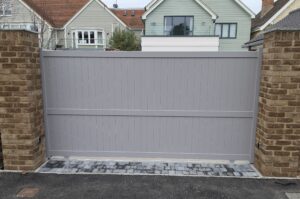
Unsafe gates pose real risks, leading to potential accidents, injuries, and significant liabilities.
Legal Requirements for Automated Gate Safety in the UK
Although some may overlook it, the legal requirements for automated gate safety in the UK are essential for ensuring the well-being of everyone involved.
We must adhere to specific safety requirements to prevent creating an unsafe gate that could lead to accidents or injuries. UK law holds gate owners legally liable for ensuring their automated gates comply with current safety standards.
The Machinery Directive, health and safety obligations, and industry best practices guide this compliance. By following these guidelines, we protect not only our legal interests but also fulfill our moral duty to keep all users of automated gates safe.
The Real Risks of Unsafe Automated Gates
Automated gates, while convenient, come with significant responsibilities that we can’t ignore.
Ensuring gate automation safety is vital to prevent potential hazards and meet safety requirements. When we overlook these, the risks are severe:
- Accidents and Injuries: Unsafe automated gates can lead to tragic incidents, leaving us legally liable.
- Financial Implications: We may face insurance issues, legal costs, and compensation claims.
- Moral Duty: There’s a moral responsibility to protect children, pedestrians, and property users.
Prioritising safety is essential, not only to safeguard lives but also to secure our legal and moral standing.
Understanding UK Safety Standards for Automated Aluminium Gates
As we explore the UK safety standards for automated aluminium gates, it’s essential to understand the key requirements for gate automation and the importance of compliance.
Together, we’ll examine how risk assessments are conducted to guarantee these gates meet stringent safety criteria.
Key UK Safety Standards for Gate Automation
Understanding the safety standards for gate automation in the UK is vital to confirm compliance and protect both property and individuals.
We must adhere to specific regulations to guarantee our automated gates are safe and reliable.
Key UK safety standards include:
- BS EN 12453: This standard outlines the safety requirements for powered gates, focusing on gate automation safety and preventing accidents.
- BS EN 12445: This standard specifies testing procedures for automated gates to verify they function safely and effectively.
- Compliance Certification: It’s essential for legal compliance and peace of mind.
Regular risk assessment and documentation help maintain standards and confirm ongoing safety.
Compliance Requirements and Risk Assessment
Guaranteeing compliance with UK safety standards for automated aluminium gates is essential for both property protection and personal safety.
We must understand the critical role that gate automation safety plays in this process. Compliance certification verifies that gates meet BS EN 12453 and BS EN 12445 standards, safeguarding users from potential hazards.
Risk assessment requirements help identify and mitigate dangers associated with automated gates. Installers must guarantee these safety standards are met, providing documentation and regular testing to maintain compliance.
Essential Safety Features for Automated Aluminium Gates
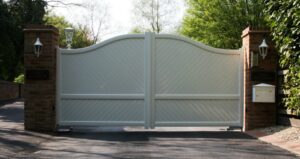
As we consider essential safety features for automated aluminium gates, let’s focus on the significant role of safety edges and pressure-sensitive protection in preventing accidents.
Photocells are another key component, effectively detecting obstacles to enhance user safety.
It’s also essential to implement entrapment prevention measures and force limiting systems, alongside warning systems, to guarantee thorough protection.
Safety Edges and Pressure-Sensitive Protection
When choosing automated aluminium gates, it’s crucial to take into account essential safety features that protect both people and property.
Safety edges, or pressure sensitive edges, are critical safety devices designed to detect contact and halt gate movement. These are strategically placed on the closing edges and the moving leaf to prevent accidents.
Consider these three safety essentials:
- Closing Gaps: Properly address closing gaps to minimise potential crushing points.
- Force Exerted: Verify the force exerted by the gate is within safe limits.
- Testing Requirements: Regularly test edge sensitivity to maintain effective operation.
Let’s prioritise safety to enjoy our gates confidently!
Photocells and Obstacle Detection Systems
While we appreciate the elegance and functionality of automated aluminium gates, it’s imperative to prioritise safety with the integration of photocells and obstacle detection systems.
Safety photocells are essential in preventing accidents by detecting obstacles in the gate’s path. Proper positioning and multiple photocell pairs guarantee thorough coverage, protecting against potential crushing points.
Obstacle detection systems work alongside safety edges, stopping the gate when contact is detected, reducing the force exerted on objects.
Regular testing of these systems is critical to maintain their effectiveness.
Entrapment Prevention and Force Limiting
Ensuring the safety of automated aluminium gates is paramount, and that’s where entrapment prevention and force limiting come into play.
We need to focus on these essential features to keep everyone safe. Here’s how:
- Safety edges: These pressure-sensitive edges stop the gate if contact is detected, reducing the risk of entrapment.
- Safety photocells: Positioned strategically, they detect obstacles and prevent accidents by stopping the gate.
- Force exerted limits: Limiting the force exerted by the gate helps prevent injury and damage, with automatic reversal systems activating when necessary.
Warning Systems and User Safety
To guarantee the highest level of safety for automated aluminium gates, we must focus on essential warning systems and user safety features. Effective warning systems like flashing lights and audio signals alert users to gate movements, enhancing user awareness.
Safety devices, including emergency stop buttons and manual release mechanisms, provide critical control in emergencies. To verify these safety features remain effective, regular maintenance safety checks are crucial.
This includes inspecting components and testing safety devices frequently. By prioritising these elements, we not only prevent accidents but also verify our gates operate smoothly and safely for everyone involved.
Risk Assessment: Identifying Potential Hazards with Your Aluminium Gate
Let’s take a closer look at how a proper risk evaluation can help us identify potential hazards with our automated aluminium gates.
By evaluating common dangers like crushing points, closing gaps, and the force exerted by gate movement, we can guarantee a safer environment for everyone.
Together, we’ll examine these risks and learn how to mitigate them effectively.
Conducting a Proper Gate Safety Risk Assessment
Conducting a proper gate safety risk assessment is essential for ensuring the safe operation of your aluminium gates.
We must thoroughly examine our gates for potential risks, focusing on crushing points and other hazards. Here’s how:
- Identify Crushing Points: Look for areas where the gate’s movement could trap fingers or limbs.
- Assess Force Exerted: Evaluate the pressure your gate applies when closing. Excessive force can cause injuries or damage.
- Review Environmental Factors: Consider children, pedestrians, and vehicle traffic around your gate.
Common Hazards in Automated Aluminium Gate Systems
Recognising the importance of a thorough gate safety risk assessment, we must now focus on the common hazards present in automated aluminium gate systems.
Identifying potential hazards is essential for guaranteeing the safety of everyone around. Crushing points, where the gate closes, pose major risks, especially to children and pets. The force exerted by the gate’s movement can cause injuries if not properly controlled.
We must also consider location-specific risks, like pedestrian and vehicle traffic. Regularly evaluating these factors helps maintain safety standards.
Installation and Maintenance: Ensuring Long-Term Gate Safety
Guaranteeing the safety of your automated aluminium gate begins with professional installation and diligent maintenance.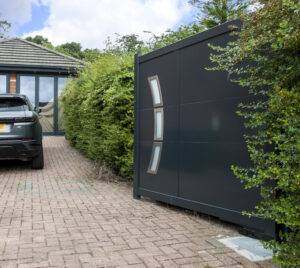
Our gates are designed to be both beautiful and secure, but keeping them functioning correctly requires ongoing attention.
Here’s how we can guarantee your gate stays safe:
- Professional Installation: Proper electric gate installation is essential. It includes setting correct force levels and positioning safety devices appropriately.
- Regular Maintenance: Gates need regular testing to remain gate safe. This includes checking safety devices regularly.
- Documentation and Alerts: Keep records of maintenance and watch for warning signs that the gate may be unsafe.
Stargate UK’s Approach to Aluminium Gate Automation Safety
At Stargate UK, we recognise that the beauty and security of your automated aluminium gate rely heavily on both professional installation and rigorous safety measures.
We design our aluminium gates for seamless integration with automatic systems, guaranteeing compliance with UK standards. Every installation includes thorough risk assessments, allowing us to identify and implement essential safety features like safety edges and photocells.
Our expert installers are trained in gate automation safety, assuring proper force settings and thorough testing. We also provide complete safety documentation, certification, and ongoing maintenance to guarantee your automatic gates remain safe and reliable for years to come.
Upgrading Existing Aluminium Gates to Meet Current Safety Standards
Upgrading automated gates to meet current safety standards is essential for both functionality and compliance. As technology advances, many existing gates require enhancements to guarantee safety and legal adherence.
Here’s how we can assess and upgrade your gates:
- Evaluate Safety Features: Identify missing safety devices like safety edges and photocells that need retrofitting for enhanced protection.
- Legal and Insurance Compliance: Confirm existing gates meet current standards to avoid liability and financial risks.
- Cost and Replacement Considerations: Weigh the cost of upgrades against complete replacements to make informed decisions.
Properly upgraded systems provide peace of mind and secure operation.
Protect People with Safe Automated Aluminium Gates
Meeting current safety standards for automated gates is essential not just for compliance but for the safety of everyone who interacts with them.
By guaranteeing our gates are equipped with the necessary safety features, we can prevent accidents and protect those around us. Compliance with legal requirements not only offers legal protection but also provides peace of mind and enhanced security.
At Stargate UK, we’re committed to providing safe gate automation solutions.
Let’s empower ourselves to guarantee our gates are both safe and compliant. We invite you to contact Stargate UK for expert safety guidance and a thorough assessment.